


This month’s WASDE report proved to be definitively bearish, with the USDA confirming larger-than-expected supplies across the corn, soybean, and wheat balance sheets. The data reinforces the market’s position in what we have termed Golden Grain Cycle Stage #1, where ample-to-burdensome supplies are expected to keep prices trading sideways around cost-of-production levels. While key uncertainties such as weather, geopolitical tensions, and international trade dynamics will continue to influence daily price action, this report establishes a clear narrative of a well-supplied global market heading into the new calendar year, placing the burden on demand to accelerate in order to absorb the surplus.
Corn
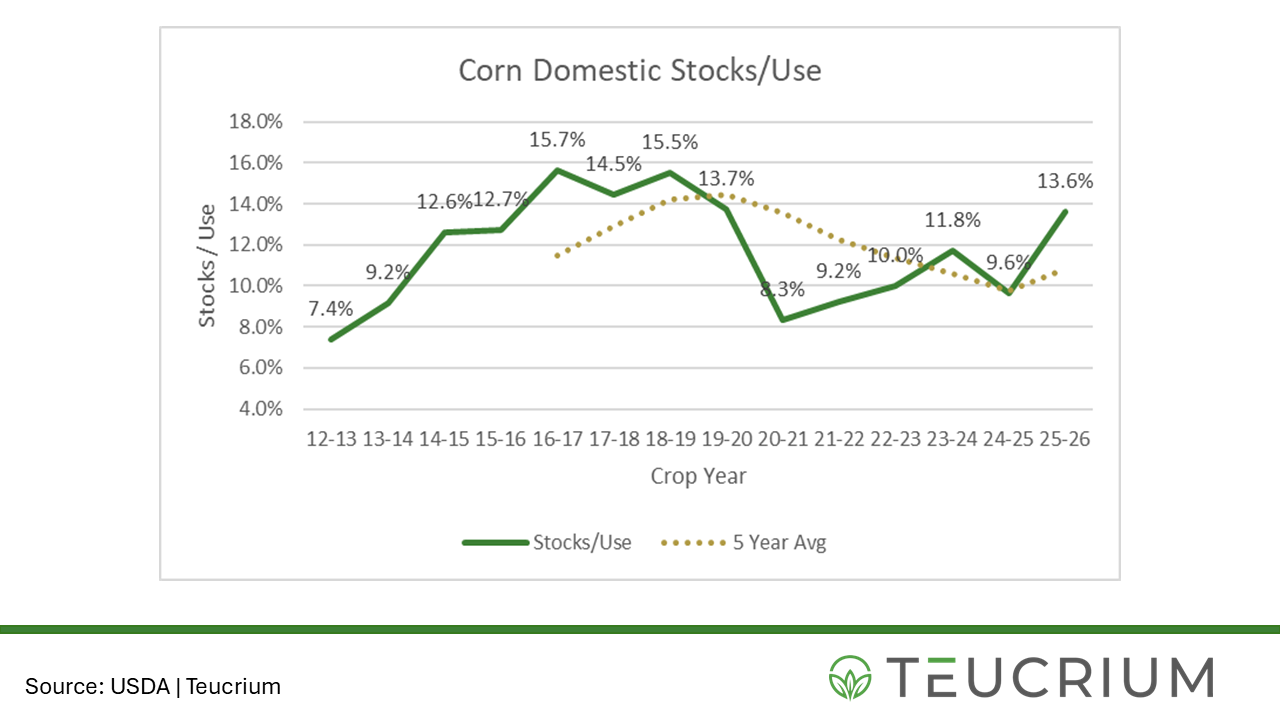
The primary surprise in this report was the significant increase in the U.S. corn balance sheet. The USDA pegged U.S. ending stocks at 2,227 million bushels, a substantial 198-million-bushel increase from the December report and well above the analyst survey average of 1,986 million bushels. This bearish revision was driven by a record crop, with production estimated at 17.0 billion bushels on an increased yield of 186.5 bushels per acre. The larger-than-expected Dec. 1 Grain Stocks figure of 13.282 billion bushels confirmed a slower-than-anticipated disappearance in the first quarter. While feed and residual use was revised higher, it was not enough to offset the surge in supply. The resulting stocks-to-use ratio now stands at a comfortable 13.6%, signifying a much looser domestic supply situation than previously thought.
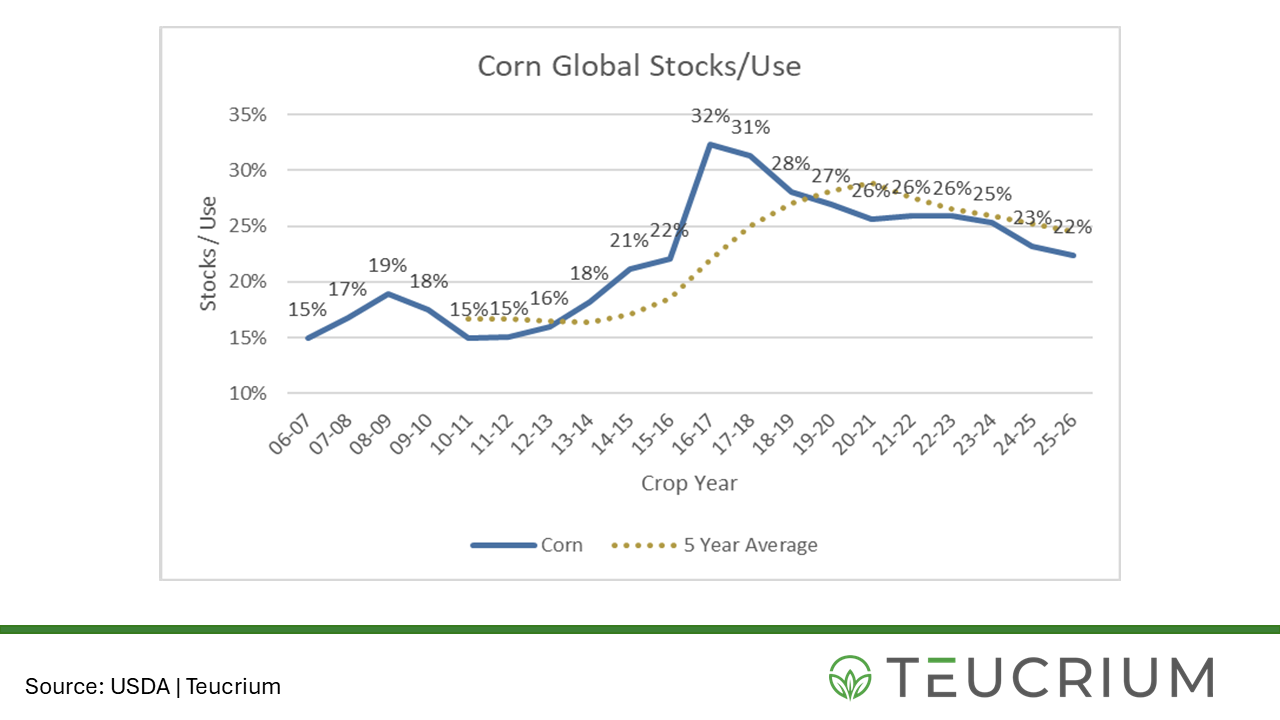
The global corn outlook is similarly bearish. World ending stocks are projected at 290.9 million metric tons (MMT), up 11.8 MMT from last month and surpassing the trade’s expectation of 280.0 MMT. The increase is “mostly reflecting an increase for China,” where production was raised to a record 301.2 MMT. This builds upon an already ample global supply picture, pushing the world stocks-to-use ratio to 22.4%. The combination of a record U.S. crop and swelling foreign stocks presents a formidable headwind for prices.
Soybeans
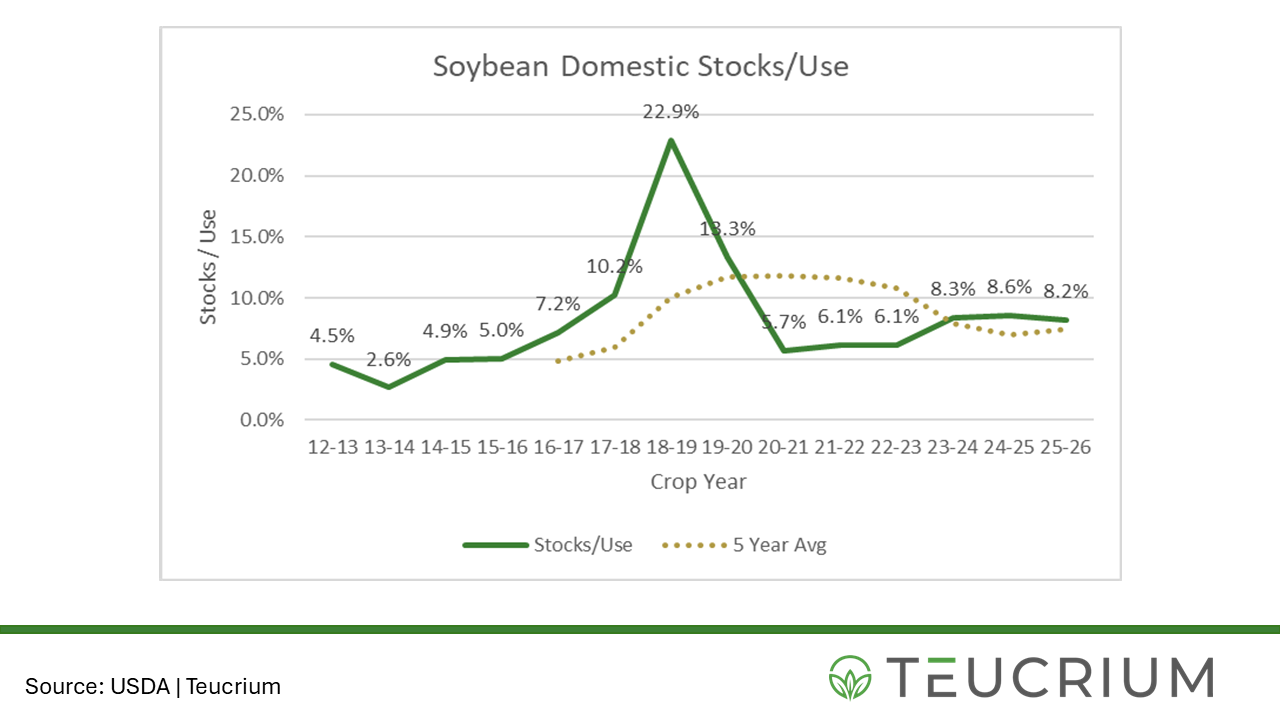
The USDA delivered a decidedly bearish report for soybeans, revising U.S. ending stocks sharply higher to 350 million bushels. This represents a 60-million-bushel increase from the December forecast and blew past the survey average of 294 million bushels. The change was almost entirely due to a 60-million-bushel cut in the export forecast, now pegged at 1.575 billion bushels, as the pace of shipments continues to lag. This adjustment dramatically alters the domestic balance sheet, pushing the U.S. stocks-to-use ratio up to a much more comfortable 8.2%.
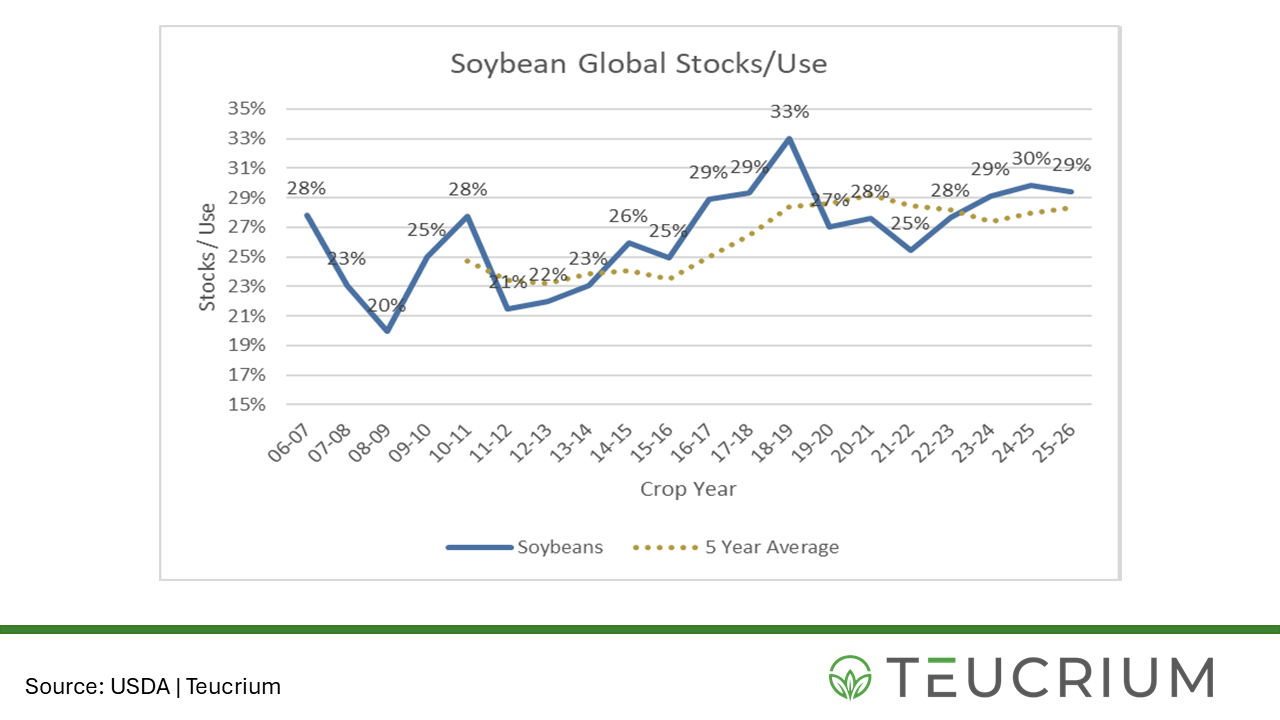
Globally, the supply picture also expanded. World ending stocks were increased by 2.0 MMT to 124.4 MMT, higher than the 123.5 MMT consensus. The revision reflects the larger U.S. stocks and, critically, another increase in South American production. The USDA raised its forecast for Brazil’s soybean crop by 3.0 MMT to a record 178.0 MMT, citing beneficial weather in the Center-West. This massive Brazilian crop continues to hang over the market, providing stiff competition for U.S. exports. The global stocks-to-use ratio of 29.4% underscores the theme of ample global oilseed supplies.
Wheat
The wheat complex was not immune to the bearish tone of this month’s reports. The USDA revised U.S. 2025/26 ending stocks up by 25 million bushels to 926 million, exceeding both the December figure of 901 million and the analyst expectation of 896 million. The increase was a direct result of a 20-million-bushel reduction in feed and residual use, a move prompted by the larger-than-expected stocks figure in the quarterly NASS Grain Stocks report. With total use declining, the U.S. stocks-to-use ratio swelled to a burdensome 45.6%, signaling a heavy domestic surplus.
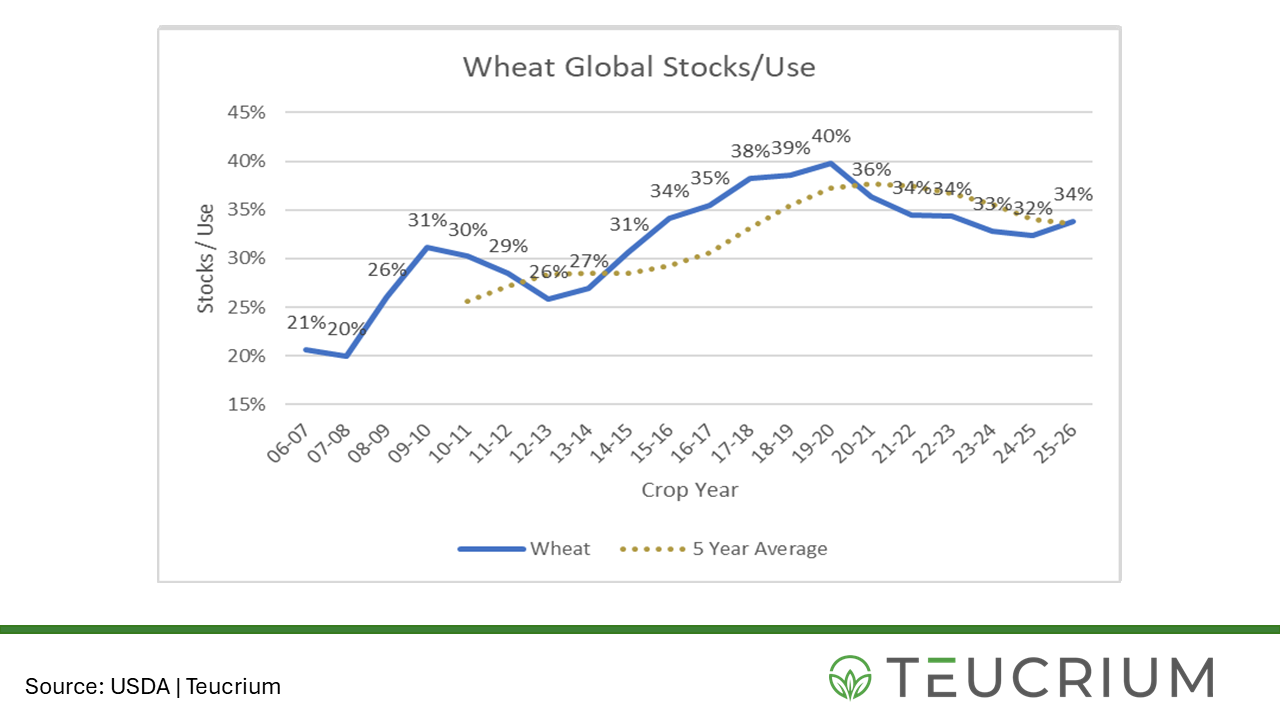
On the world stage, the outlook is for larger supplies and stocks as well. Global ending stocks were raised by 3.4 MMT to 278.3 MMT, primarily on the back of increased production forecasts for key exporters. With its harvest nearly complete, Argentina’s production was raised 3.5 MMT to a record 27.5 million, nearly 50% larger than the previous year. Russia’s crop was also increased by 2.0 MMT. These upward revisions from major U.S. competitors, combined with a comfortable global stocks-to-use ratio of 33.8%, suggest continued headwinds for U.S. exports and a well-supplied global market.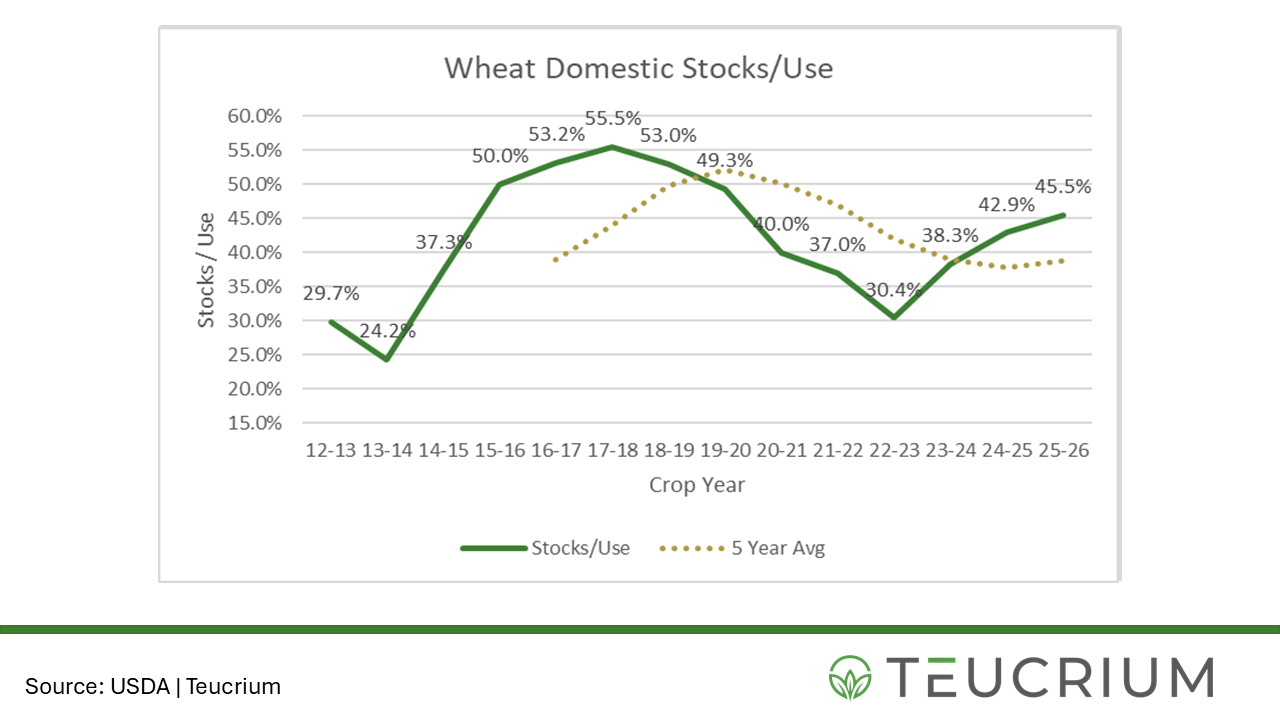
Topics:
