


The December WASDE report arrived with an unexpectedly supportive tone for the row crops. December releases are typically quiet, but this one carried firmer signals. Corn and soybeans both pushed against bearish expectations, while wheat remained weighed down by ample supplies. The broader backdrop remains unchanged: markets continue to trade around cost-of-production levels consistent with Stage 1 of the Golden Grain Cycle. Even so, today’s revisions added a layer of demand-led support for the row crops.
The market will absorb these numbers quickly before shifting its attention back to South American weather patterns and ongoing geopolitical tensions.
CORN
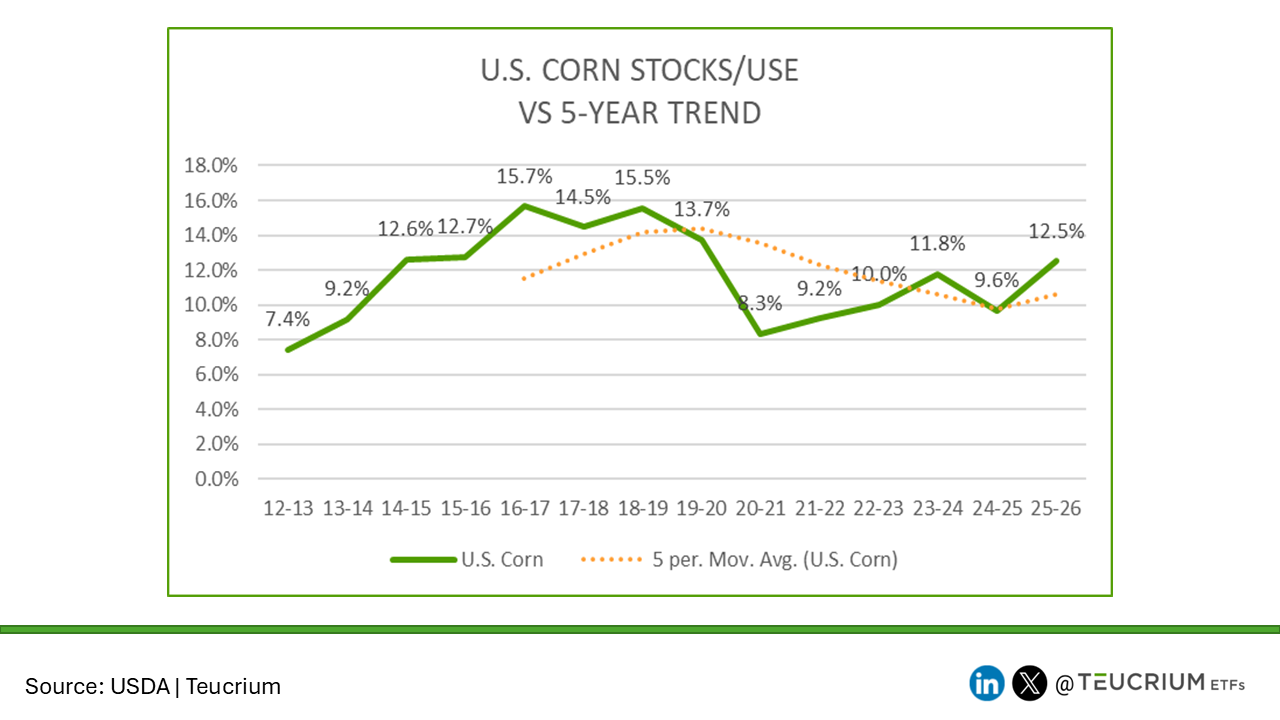
Corn received the strongest boost of the day. USDA projected 2025–2026 United States ending stocks at 2.029 billion bushels, down 125 million from last month and well below the average pre-report estimate of 2.146 billion.
The tightening came entirely from the demand side. Exports were raised by 125 million bushels to 3.2 billion. USDA cited robust foreign buying and fast early-season shipments that are running ahead of normal pace. Production was unchanged, meaning the higher export projection passed directly into lower domestic ending stocks.
The stocks-to-use ratio tightened to 12.5 percent. Supplies remain adequate, but the margin for error shrank. Any production issue in 2026 would now meet a thinner buffer.
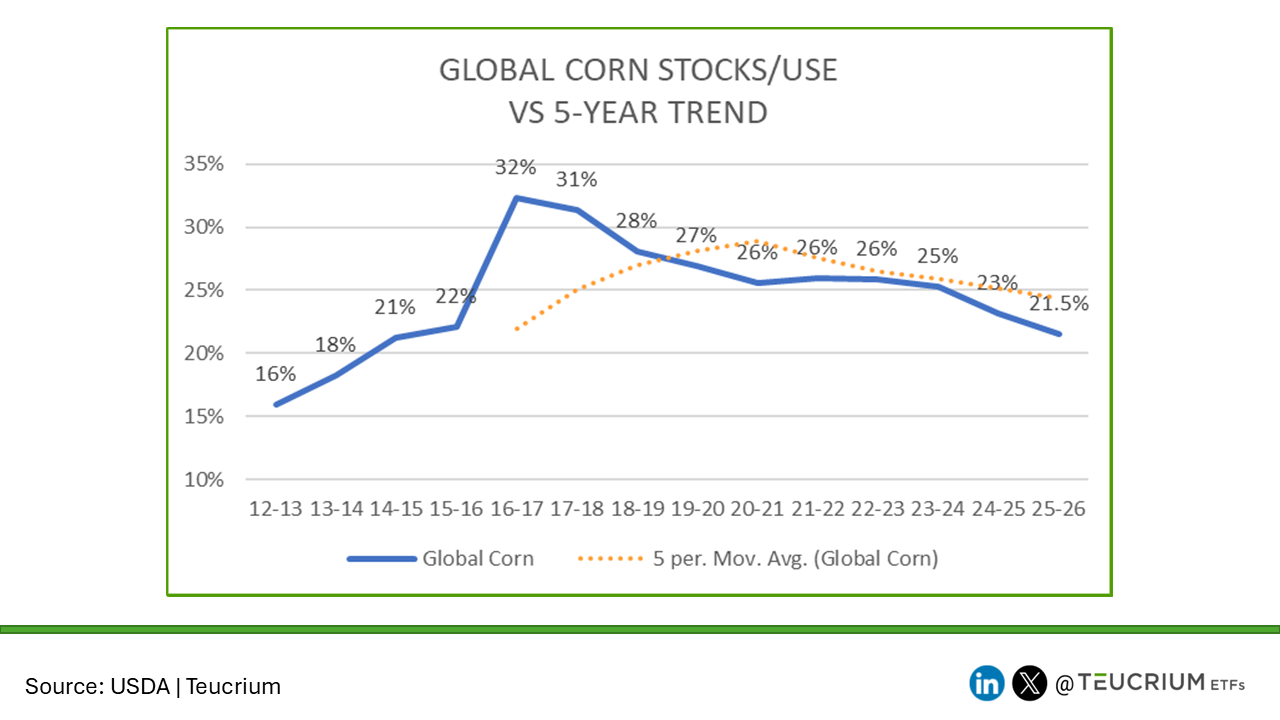
The global situation leaned in the same direction. World-ending stocks were projected at 279.2 million metric tons, lighter than expectations of 281.1 million. Lower production estimates in Ukraine and Canada continued to tighten foreign availability. The global stocks-to-use ratio of 21.5 percent reflects a market that is steady but firming, with improved U.S. export competitiveness carrying through the outlook.
SOYBEANS
Soybeans present a mixed backdrop: domestic tightness stands in contrast to ample global supply.
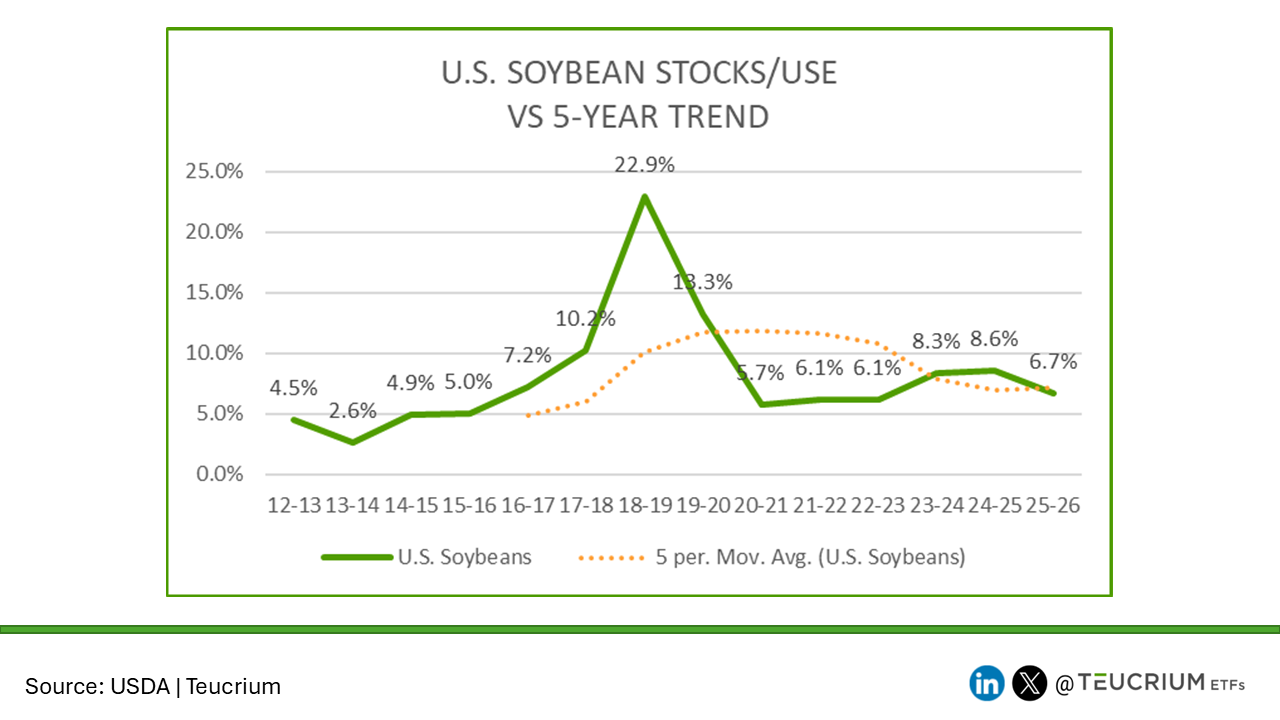
United States ending stocks were held at 290 million bushels. That figure matched last month’s estimate but arrived below the analyst consensus of 306 million. The absence of supply-side changes kept the domestic balance sheet unchanged. The stocks-to-use ratio stayed at 6.7 percent, a historically tight reading that signals a market with little slack. Prices must stay supported enough to ration demand or to encourage acreage next spring.
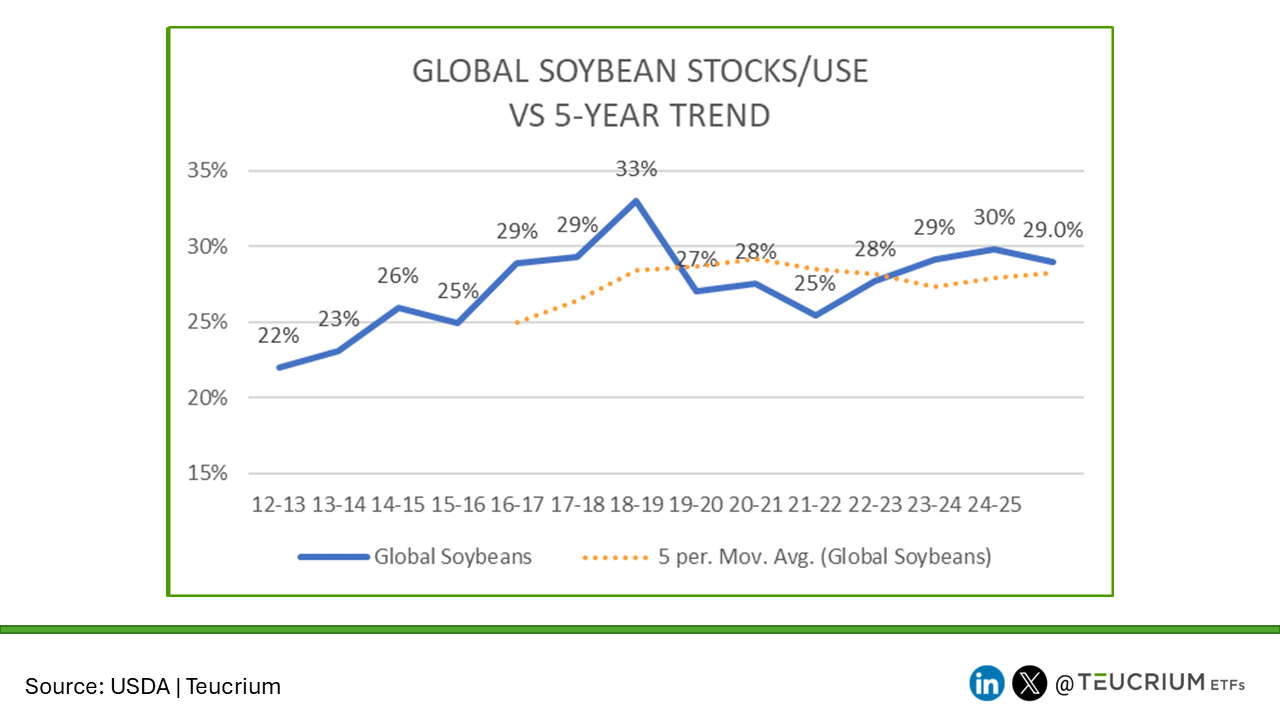
Globally, conditions were softer. World-ending stocks were pegged at 122.4 million metric tons. Although slightly below expectations, the global stocks-to-use ratio of 29.0 percent underscores a market with abundant supply. Higher production prospects in Russia and India, paired with large Brazilian stocks, offset declines elsewhere. This “wall of soy” continues to cap upside potential, even as domestic tightness maintains a supportive tone for the United States market.
WHEAT
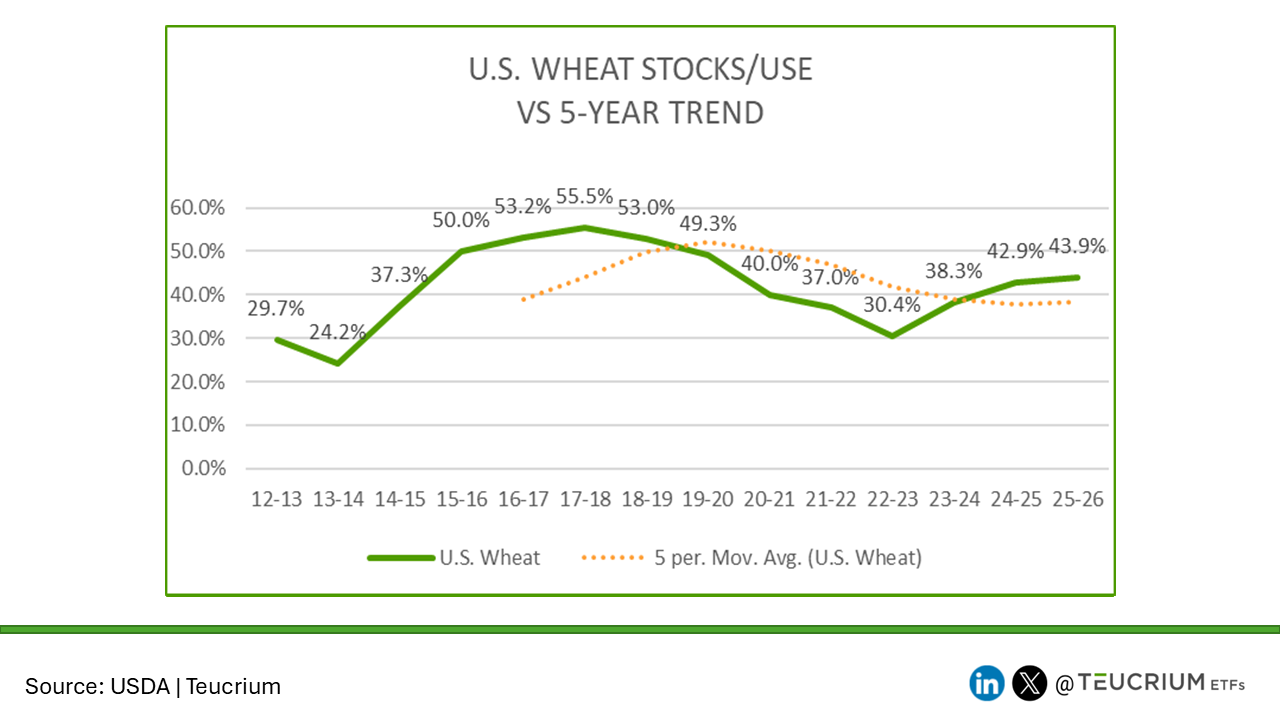
Wheat continued to carry the heaviest tone of the complex. United States ending stocks were estimated at 901 million bushels, above the average trade expectation of 893.8 million.
While aggregate supply and use were left unchanged, class-level adjustments offset one another. With no increase in demand to absorb the large supply base, the stocks-to-use ratio held at 43.9 percent. Readings above 40 percent historically limit upside potential. Wheat remains well supplied, and prices should continue to face resistance, absent a meaningful weather-driven disruption.
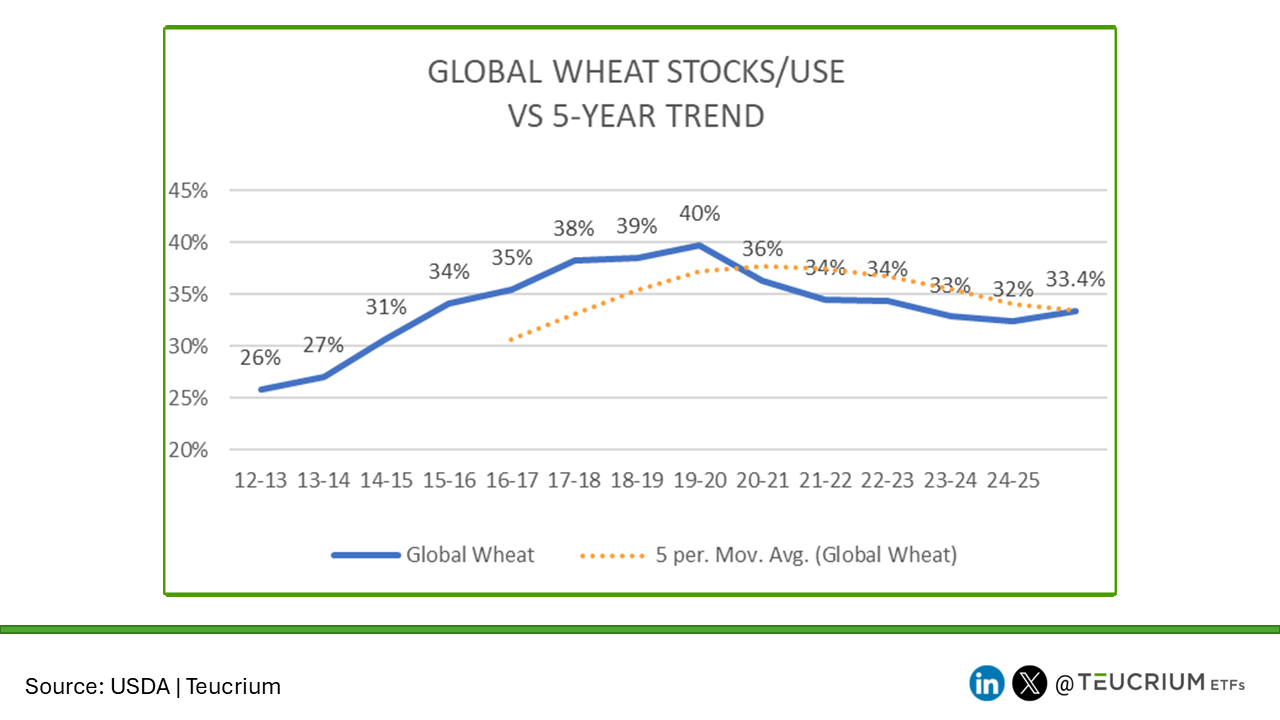
The global outlook reinforced the domestic picture. World-ending stocks rose to 274.9 million metric tons. Higher production estimates across several major exporters—including Canada, Argentina, and the European Union—added to the supply build. With a global stocks-to-use ratio of 33.4 percent, importers remain in a comfortable position. Any rally attempt would likely encounter a firm ceiling.
Takeaway
Corn and soybeans showed constructive tightening while wheat stayed heavy. U.S. row crops continue to firm modestly even as the global backdrop remains broadly supplied. Prices remain anchored near cost-of-production levels, which is consistent with Stage 1 of the Golden Grain Cycle. For traders and long-term allocators, this environment is familiar as some will likely consider allocating on dips in corn and soybeans but remain cautious toward wheat until the supply picture shifts.
Topics:
