Wheat
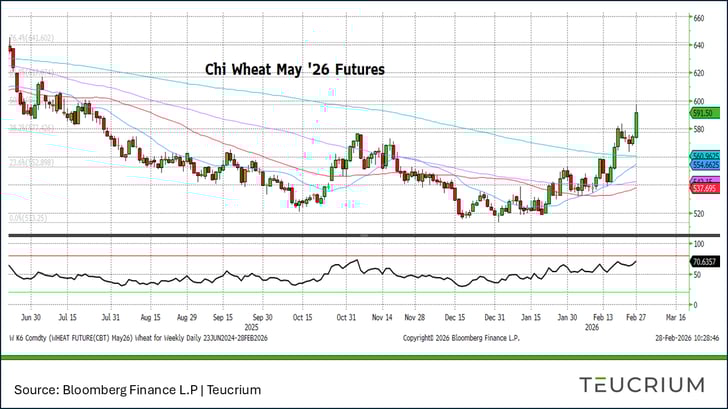
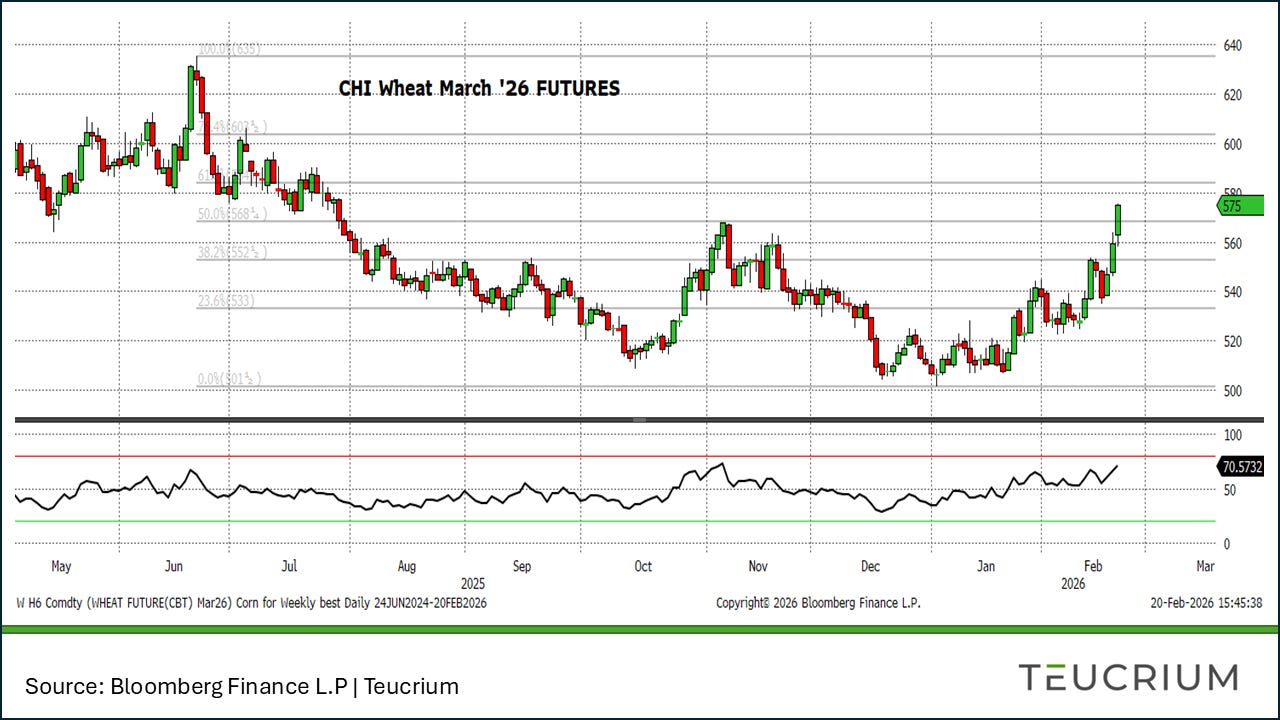
Wheat futures moved higher this week, with the May contract posting its highest price since February of last year. The rally was ignited by Russian missile attacks on Odessa's grain facilities and accelerated as futures tore through key swing highs, triggering a wave of technical buy-stops. For weeks, the market has been searching for a fundamental reason for its resilience, and while Russian aggression provided the spark, the underlying strength may be tied to short-covering from funds who are re-evaluating their positions. This week's action closed above the 200-day moving average for the seventh consecutive session, a technical signal that suggests the trend may have turned.
Key Levels: After clearing the 200-day moving average (around $5.72), the next upside target is near the 76.4% Fibonacci retracement level of $6.11. The $5.72 level now acts as key support.
Corn
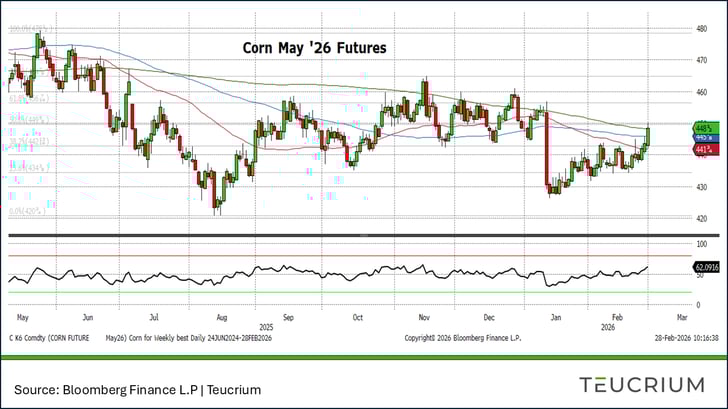
Corn futures broke out to a new multi-week high, driven by end-of-month short-covering and technical buying that pushed the May contract through resistance. The rally signals a potential trend change, as capital begins to flow to the long side of the market. While a robust export program continues, with sales to Korea, Taiwan, and Turkey, the demand has not been strong enough to lift basis levels at the Gulf. Focus is turning to North American planting intentions, with the revenue insurance price ratio favoring soybeans over corn. However, with the March contract's open interest cleared, calendar spreads have tightened, corresponding with the move upward in futures. Favorable weather in the eastern Corn Belt and rains forecasted for the southern Plains have provided a mixed but generally stable outlook for the upcoming season.
Key Levels: Resistance stands at the 50% Fibonacci retracement near $4.49. Initial support forms at the 38.2% retracement level around $4.43.
Soybeans
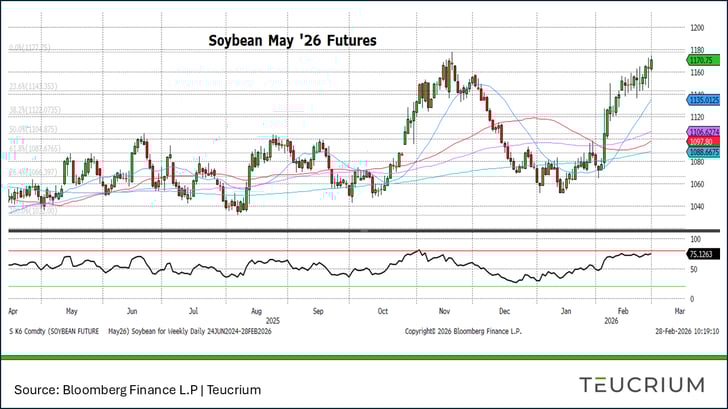
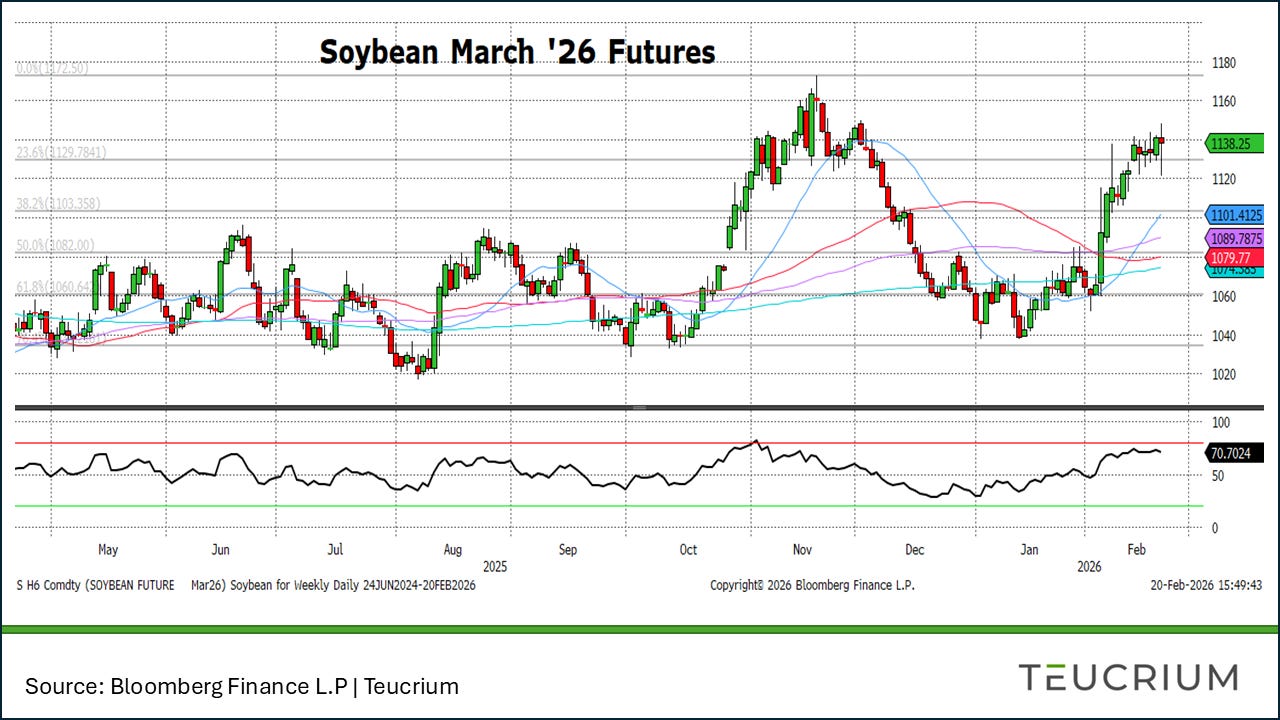
Soybeans continued their rally, posting new highs as the complex remains supported by strong demand for biofuel feedstocks. The market appears to be pricing in a significant renewable-volume obligation (RVO) from the EPA, which has propelled soyoil futures thirteen cents higher since the start of the year and lifted crush margins to a remarkable $2/bushel. This strength in the oil market has been the primary driver, pulling both meal and raw soybeans higher. While Chinese buying has been light, the domestic demand story is overpowering the quiet export front. US farmers are reportedly 78-80% sold on their old crop, and with strong crush margins, processors own an estimated 10 to 12 weeks of supply. The market shows strong bullish conviction, but with speculative funds heavily long, it may be vulnerable to a correction.
Key Levels: Resistance for the May contract is at the recent high of $11.70 ¾, with the next Fibonacci target near $11.77 ¾. Initial support rests near $11.35.
Sugar
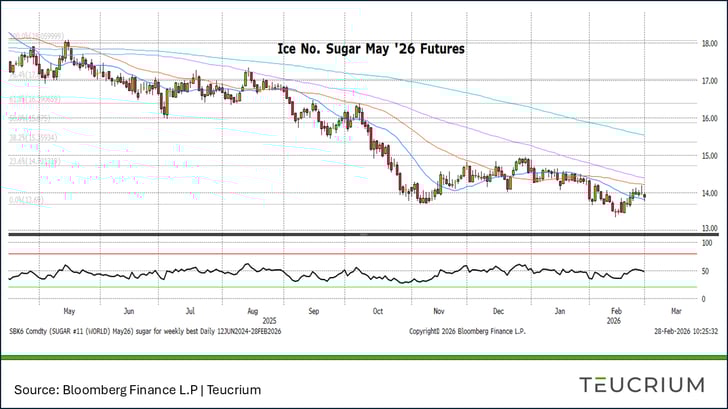
Sugar futures have declined as the market anticipates a significant shift from recent global deficits to substantial surpluses over the next few years. This transition is primarily driven by increased production from India, Thailand, and sustained output from Brazil. The International Sugar Organization is forecasting a global sugar surplus of approximately 1.22 million metric tons (MMT) in 2025-26, a sharp contrast to the deficit recorded in 2024-25. This bearish outlook has been reinforced by multiple analysts. The market is reflecting this sentiment, with speculative funds holding a record net short position. While this positioning has contributed to downward price pressure, it also creates the potential for a sharp short-covering rally if fundamentals shift unexpectedly.
Key Levels: Resistance emerges near the 23.6% Fibonacci retracement around $0.1433. Support remains at the recent lows near $0.1370.