


Soybeans
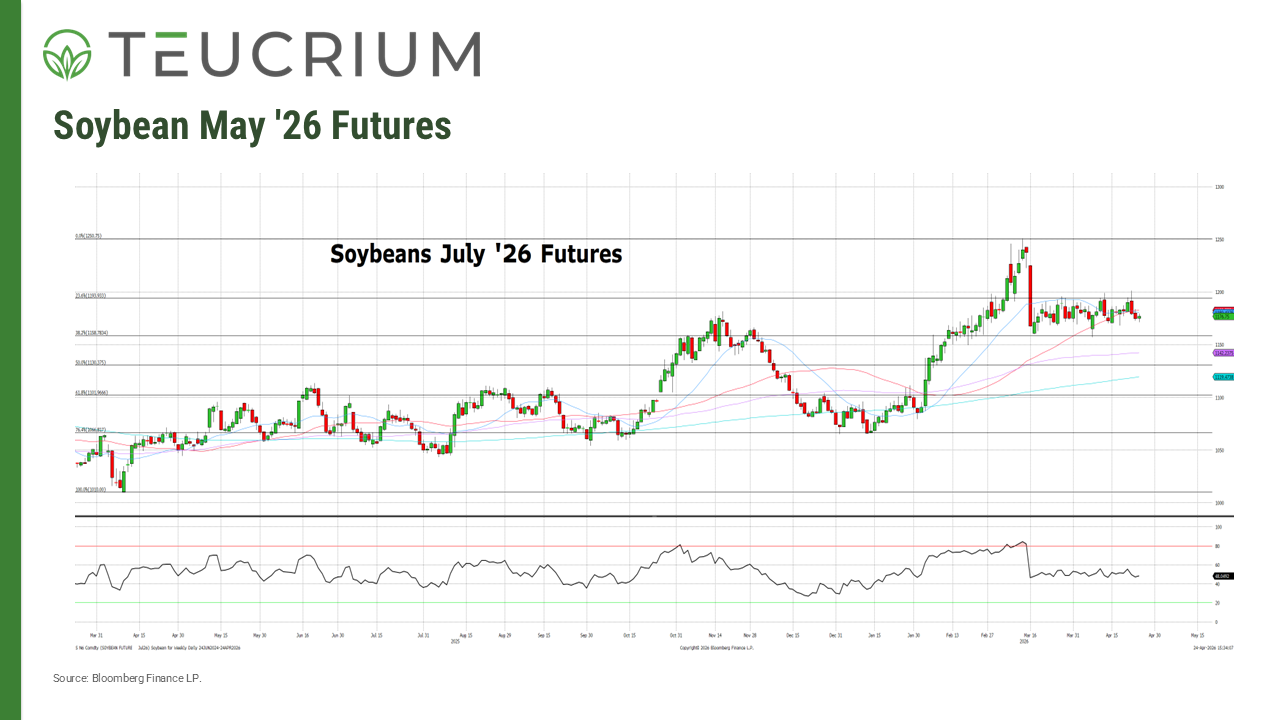
Soybean futures closed mixed this week, but the real story played out in the oil complex. Biodiesel demand sparked a dramatic rally in soybean oil that could potentially reshape crush margins for months ahead.
Domestic soybean oil basis surged 200 points over two weeks, with the May/July spread inverting to 48 points as crushers scrambled to secure nearby supplies, according to Marex evening comments. July crush margins climbed above $3.35 per bushel, approaching levels that could significantly expand processing capacity utilization.
The rally stems from what Marex described as “massive positive margins” in biodiesel production, with “obligated party demand” creating pricing conditions that may persist through the summer months. Some crushers with previous lower-margin hedges now face margin calls on their production coverage, the firm noted.
China imported 2.81 million tons of beans in the first quarter, compared to 2.16 million tons a year ago, according to Marex. Brazilian export premiums rose 4 cents Friday, while meal basis strengthened in both Brazil and Argentina, Marex reported.
Sugar
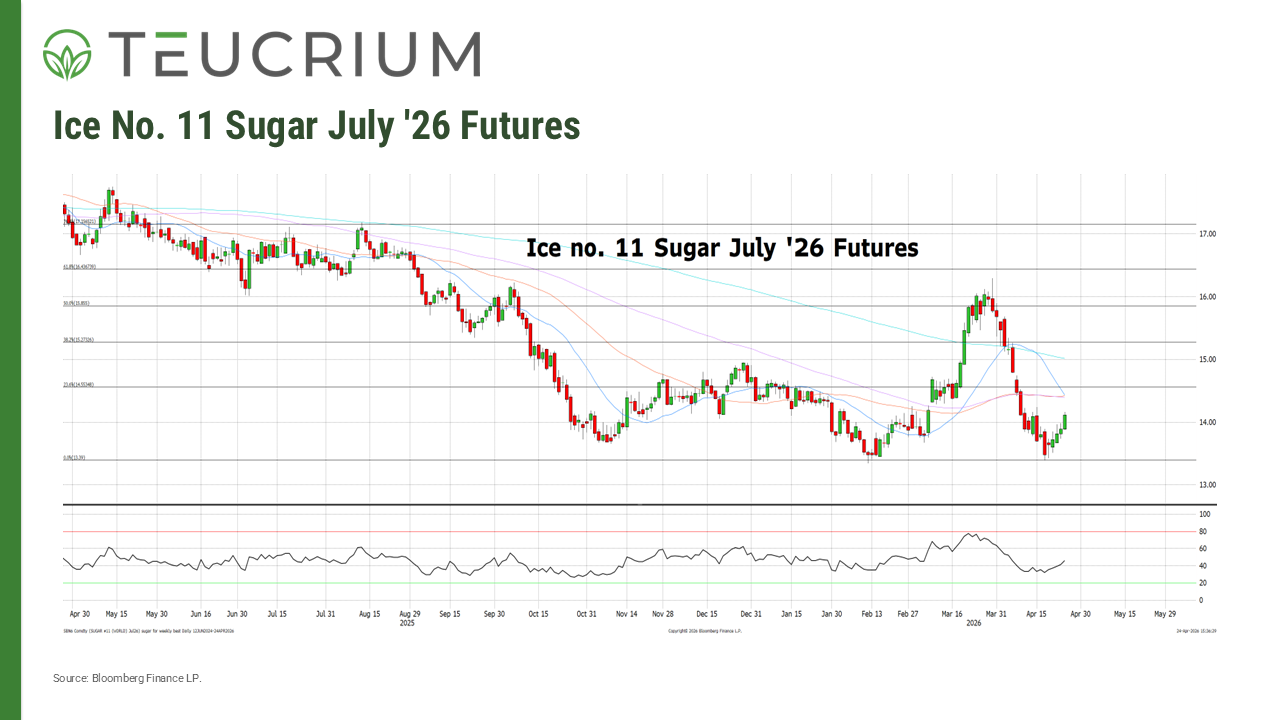
Raw sugar futures posted their fifth consecutive daily gain Friday, marking the longest winning streak since November. The most-active contract rose as much as 1.9% to 14.15 cents per pound as rising crude oil prices provided broad commodity support.
The market is “mounting a correction of sorts,” though there are “numerous technical hurdles to overcome for the market to look like it is on more secure footing,” analyst Mike McDougall told Bloomberg.
Wheat
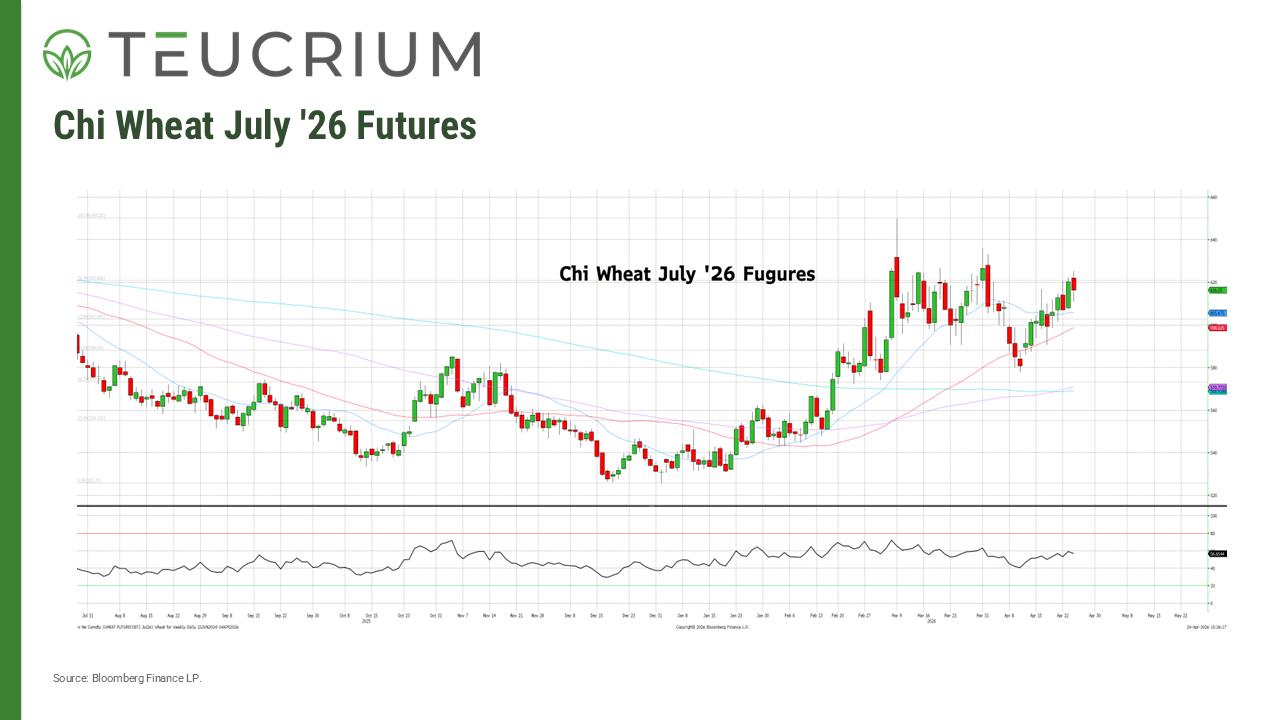
Wheat futures trimmed their weekly climb Friday, with the most-active contract down 1.1% as thunderstorms brought rain to parts of Oklahoma, helping to quell drought conditions, Bloomberg reported. The move came after Thursday’s rise when July wheat climbed 2.5% to $6.22 a bushel in response to expanding drought conditions in western U.S. wheat fields.
Winter wheat condition was called a surprisingly low 30% good to excellent versus 34% last week, according to USDA’s weekly crop progress report. The crop was 20% heading versus 12% average, and Kansas was 15% heading, Marex noted in their evening comments.
International factors remain mixed. The Russian export FOB for April/May was offered around $242 per ton, with new crop July offered around $237 per ton, showing some discounts, Marex reported. Weather forecasts show potential frost risk in Russia’s Rostov and Stavropol regions, though damage assessment remains preliminary. India raised its domestic wheat buying target to 34.5 million tons for the 2026-27 marketing season from an earlier target of 30 million tons, Bloomberg reported.
Corn
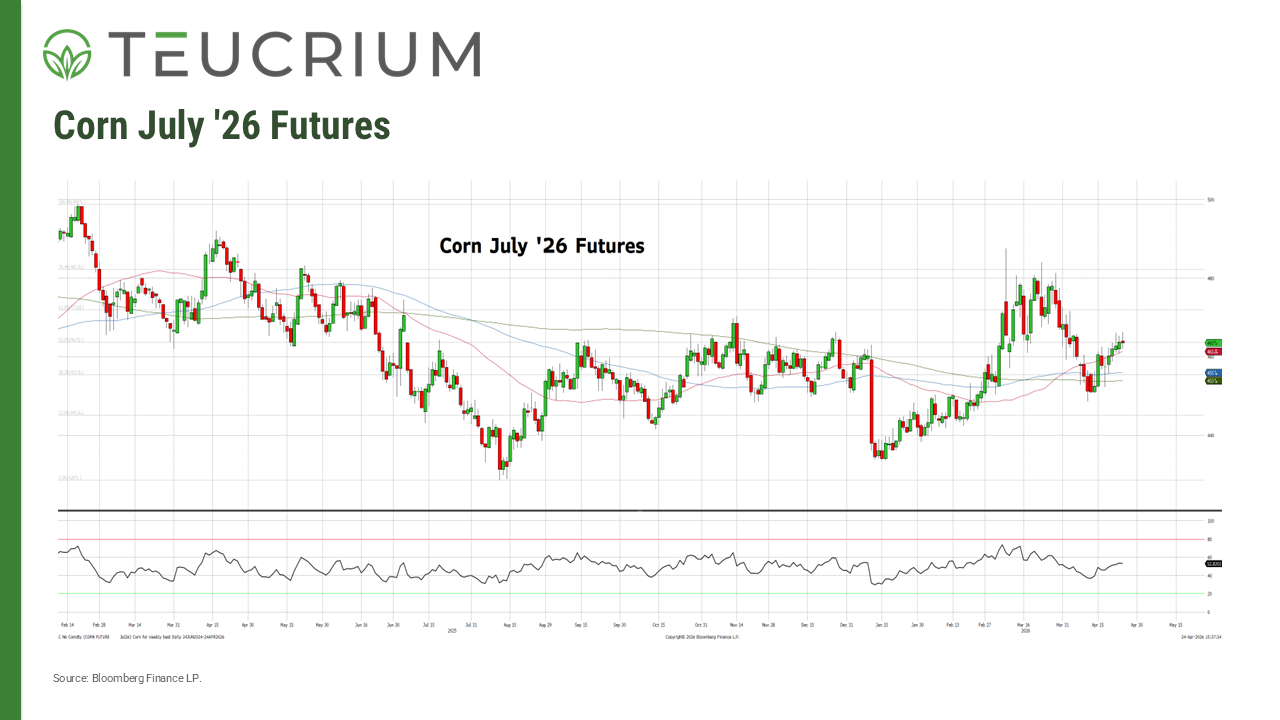
Corn futures experienced profit-taking Friday, with the most-active contract down 0.4% ahead of the weekend, Bloomberg reported. European corn hit a six-week high Thursday as concerns grew that surging fertilizer prices may reduce planting areas.
U.S. corn export sales for the week ended April 16 totaled 1.76 million metric tons across the 2025/26 and 2026/27 marketing years, landing on the high end of analyst expectations, according to USDA data cited by Bloomberg. That represented an increase from 1.457 million tons the previous week.
Argentine production estimates continue climbing. The Ag Attaché in Argentina called the country’s corn crop 61 million tons versus the WASDE estimate of 52 million tons, according to Marex evening comments. Crop scout Michael Cordonnier raised his Argentine crop estimate to 60 million tons, up 6 million tons from his last estimate.
The revisions reflect what Marex described as extensive late planting, with “a bunch of the corn planted even in January” that “took that much longer for the satellites to pick it up.” This extended the harvest timeline and complicated early-season production assessments.
Fertilizer supply concerns are building on the other side of the ledger. U.S. fertilizer buyers are redirecting shipments overseas as higher international prices create financial incentives to divert critical supplies, according to a Reuters report. A private survey from grain merchandiser Farmer’s Keeper showed 20.3% of producers indicating a decrease in corn acres since USDA’s March Prospective Plantings report, citing fertilizer supply and price concerns.
U.S. planting conditions remain supportive, with 11% of the crop seeded versus 5% last year and the 9% average. Cooler temperatures may potentially slow field operations over the next two weeks.
This communication is for informational purposes only and does not constitute investment advice or a recommendation to buy or sell any commodity, futures contract, or other financial instrument. Futures trading involves substantial risk of loss and is not suitable for all investors. Past performance is not indicative of future results.
